You Don't Have to Go Through Anastrozole Treatment Alone: How to Find Peer Support That Actually Helps
There is a particular kind of understanding that only someone who has swallowed the same pill, managed the same aching joints, and lain awake at the same hour wondering whether this is all worth it can offer. Clinicians provide expertise. Friends and family offer love. But peers — women who are living the same experience from the inside — provide something different: recognition.
For women on anastrozole therapy, that recognition can be profoundly stabilizing. It can also, if pursued in the wrong spaces, become a source of fear, misinformation, and pressure to make medical decisions based on anecdote rather than evidence. The difference between those two outcomes depends largely on where you look and how you evaluate what you find.
Why Peer Support Matters in Long-Term Hormone Therapy
Anastrozole is typically prescribed for five to ten years. That is not a short course of treatment to push through. It is a sustained relationship with a medication that changes how your body feels, how you sleep, how your joints move, and sometimes how you see yourself. The psychological demands of that relationship are not trivial.
Research on social support in cancer survivorship consistently identifies peer connection as a significant moderating factor in treatment adherence and quality of life. A 2020 study published in Supportive Care in Cancer found that women who participated in peer support programs during aromatase inhibitor therapy reported higher rates of medication adherence and lower rates of treatment-related anxiety than those who did not. The mechanism is not complicated: when people feel less alone in an experience, they are more likely to stay engaged with it.
This is not a soft finding. It has clinical implications for whether women complete their prescribed course of anastrozole — and by extension, for their long-term outcomes.
Where to Look: A Map of Available Resources
Disease-Specific Organizations
The most reliable starting points for peer support are organizations with established clinical credibility. In the United States, several nonprofit organizations offer structured support programs specifically for breast cancer patients and survivors:
- Susan G. Komen (komen.org) offers a helpline staffed by trained Patient Navigators and connects callers with local support programs.
- Breastcancer.org hosts one of the most active and moderated online discussion forums specifically for breast cancer, with dedicated threads for aromatase inhibitor users.
- SHARE Cancer Support (sharecancersupport.org) provides peer-to-peer telephone support programs matching patients with trained volunteer survivors who have had similar diagnoses and treatment experiences.
- Young Survival Coalition (youngsurvival.org) focuses on women diagnosed at or under 40, a population for whom anastrozole is sometimes prescribed following induced menopause and who have distinct needs and concerns.
These organizations maintain editorial standards, moderate their communities, and typically have clinical advisors who review the information shared on their platforms.
Online Communities and Social Media
Facebook groups, Reddit communities (particularly r/breastcancer), and condition-specific forums on platforms like Health Unlocked can be genuinely valuable — or genuinely harmful — depending on how they are managed and how you engage with them.
The scale of these communities is their primary advantage. A private Facebook group for aromatase inhibitor users may have tens of thousands of members, which means that no matter how specific your question or how unusual your experience, someone in that group has likely been there. The volume of shared experience can be reassuring and practically useful.
The risk is the same: volume without curation. In unmoderated or lightly moderated online spaces, anecdote can masquerade as evidence. A single member's dramatic negative experience with anastrozole may generate dozens of responses that collectively create an impression of universal catastrophe — one that does not reflect the statistical reality of most patients' treatment journeys.
Local Hospital and Cancer Center Programs
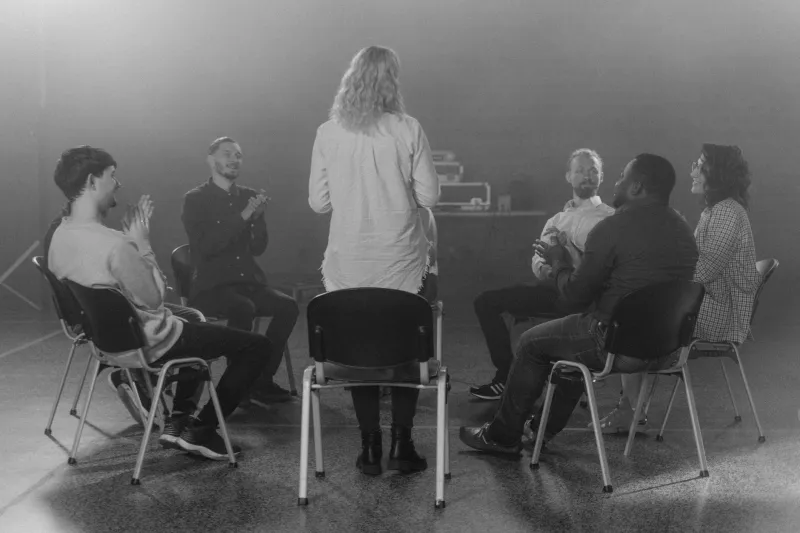
Many comprehensive cancer centers in the United States — including NCI-designated cancer centers — offer in-person or hybrid support groups facilitated by licensed social workers or oncology nurses. These groups tend to be smaller, more intimate, and more clinically grounded than online communities. They also offer something online spaces cannot: physical presence, which many patients find irreplaceable.
Ask your oncology social worker whether your treatment center runs such a program. If it does not, ask for a referral to community-based programs affiliated with local hospitals.
How to Evaluate Whether a Support Space Is Truly Helping You
Not every community that calls itself supportive actually functions that way. Before investing significant time and emotional energy in a particular group or forum, consider the following questions:
Is the community moderated? Groups with active moderation are less likely to allow dangerous health misinformation to circulate unchallenged. Look for stated community guidelines and evidence that they are enforced.
Does the group encourage members to consult their medical teams? Healthy peer communities supplement clinical care; they do not replace it. If a group routinely encourages members to change their medications, discontinue treatment, or pursue unverified remedies without medical guidance, that is a significant red flag.
Is the emotional tone sustainable? Some communities, particularly those focused on fear and grievance, can amplify anxiety rather than reduce it. If you consistently feel more frightened or demoralized after engaging with a group than before, that group is not serving your wellbeing — regardless of how well-intentioned its members are.
Are diverse experiences represented? A community dominated by members with severe side effects or very negative treatment experiences may not reflect the full spectrum of anastrozole outcomes. Seek spaces where a range of experiences — including positive and neutral ones — are welcomed.
Protecting Yourself From Misinformation
Health misinformation in breast cancer communities is not a fringe problem. It is pervasive, often well-intentioned, and sometimes genuinely dangerous. Common patterns to watch for include:
- Claims that dietary changes, supplements, or alternative therapies can replace anastrozole or make it unnecessary
- Anecdotal reports framed as universal truths ("This happened to me, so it will happen to you")
- Encouragement to stop taking anastrozole because of side effects, without recommending that the patient first speak with her oncologist
- Promotion of specific products, programs, or practitioners — particularly when the person promoting them has a financial interest
A useful internal benchmark: if information you encounter in a peer community would be worth mentioning to your oncologist, bring it up at your next appointment. Your medical team can help you evaluate whether a claim is supported by evidence or whether it reflects one person's experience in a way that may not generalize to your situation.
Making Peer Support Work Alongside Your Medical Care
The most effective use of peer support is not as an alternative to clinical guidance but as a layer of experience that enriches your ability to engage with your care team. When other women describe how they managed a specific side effect, that information can help you articulate your own experience more precisely in appointments. When you hear that someone else asked for a referral to a physical therapist or requested a different formulation of the drug, you learn that those requests are reasonable and possible.
Peer communities, at their best, make patients more informed, more confident, and more capable of advocating for themselves within the medical system. That is a meaningful clinical benefit — one that no prescription can replicate.
You do not have to navigate five or ten years of anastrozole therapy in isolation. The community of women who understand this experience from the inside is larger than you might expect, and finding your way into it — thoughtfully, with appropriate discernment — can make a measurable difference in how you experience treatment.